Statically Served Ionosphere hmF2 FoF2 Maps Using ChatGPT and GloTEC

 ChatGPT wrote a little more starter code for me to answer the question, could we simply make an image of the F2 maps?

Here are the current 3D F2 maps. These are great for visualizing what the ionosphere F2 height actually looks like. The maps are, however, a little memory and processor heavy.

I wondered if would be faster to load a simple image for a daily driver sort of F2 map.

I asked ChatGPT for help, and while things took longer this time, the LLM still made quicker work of the project.

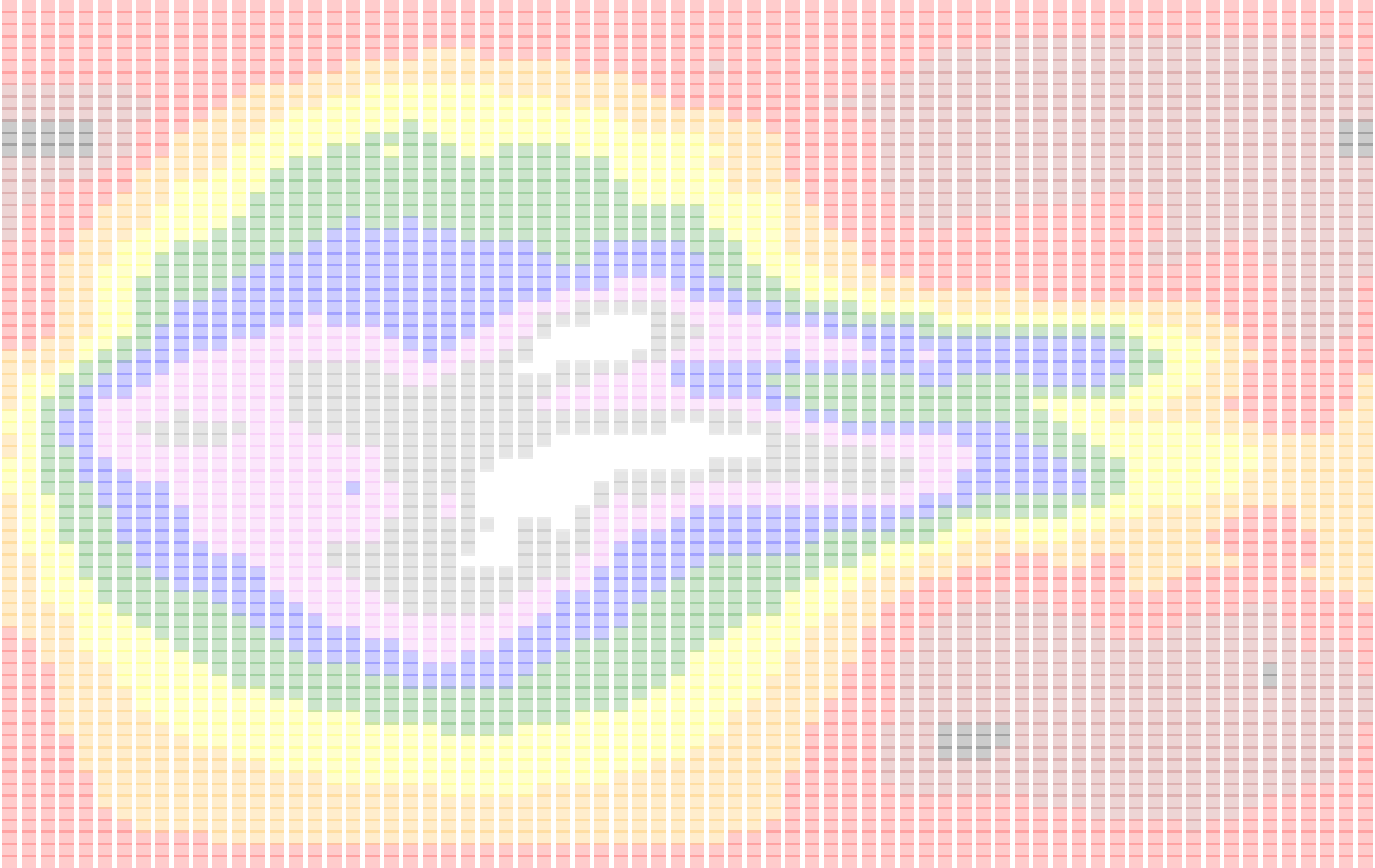
Here is one of the early sample outputs. Notice that the map is still split into grids in the same manner as the Cesium map. The only remaining task was either to display a legend on the same web page, or to use tooltips! I chose tooltips.

To implement tooltips, I needed an html <map> tag containing the FoF2 values at each grid location with FoF2 image. That wound up being a bit of a journey. My first idea was to simply crank out an entire html page in the GitHub repos and display it here with an iframe. It turns out that while you can pull text, or even an image directly from the raw pages of a GitHub repo, you cannot pull an html page into an iframe. (At least not easily.)

I thought about the issue. I knew I could ask JavaScript to pull text from a raw GitHub page and then use that text as I pleased. I asked  ChatGPT to write a basic scaffolding for me. From my specification It wrote code that parses out the map tag from the auto-generated html page I'd already set up in the GitHub repository to test iframes. From there, I used JavaScript and the browsers DOM to add that text to a map tag to annotate an F2 image with tooltips. There's a demo below. If you hover your mouse over a singe grid rectangle, it will show the most recent foF2, (critical frequency), value for that gid, the location of the rectangle, and the time the foF2 value was reported by GloTEC. I'll have this built into a formal page with the MUFD(3000 km) and the HmF2 maps in a few days. When I do, I'll be sure to leave a link here.

And here's the link to the map images. Please take a look and let us know how it works for you.


Flat World Map FoF2? overlay grid

Comments

Popular posts from this blog

How Many Files Can You Add to a GPT Project? An Interview with GPT-5 on Limits, Context Engineering Tips, and Chats

 Setting the scene: I’m tinkering with Project TouCans, knee-deep in radio logs, SQLite dumps, and Cesium code. Naturally, I’m wondering if shoving all this into one GPT Project is a recipe for brilliance… or for disaster. So I turn to Vril — you know, after Brainy from the Legion of Super-Heroes , because what else do you call your AI sidekick who always has the answers? Time to ask him straight up. [ As an aside, yes, GPT-5 has decided to sometimes call me Vail. I'm not sure why to be honest. Also, I asked Vril, er GPT-5, to write up our interview for me. Apparently, me asking it to 'Bro' up a few stories, just for fun, has convinced Vril that I use 'Like,' more than I actually might. ] Me (Vail): So Vril, how many files can I throw into a GPT Project before it just starts choking? Like, is there some magic number where the context window taps out and everything falls apart? GPT-5 (Vril): Great question. There’s no single hard file limit. What matters is ...

The Alcubierre Warp Drive Tophat Function and Open Science with Sage

I transferred yesterday's Mathematica file with the Alcubierre warp drive[2] line element and space curvature calculations to the  +Sage Mathematical Software System  today, (the files been  added to the public repository [3]).  If you haven't used Sage before, it's a Python based software package that's similar in functionality to Mathematica.  Oh, and it' free.  I also worked a little more on understanding the theory, but frankly, I made far more progress with the software than the theory.  What follows will be a little more of the Alcubierre theory, plus, a cool Sage interactive demo of one of the Alcubierre functions[1], as well as a bit about my first experience with using Sage. Theory The theory is fun, but it's moving slowly.  Here's the chalk board from this morning's discussion Alcubierre setup the derivation using something called the 3+1 formalism which means we consider space to be flat, (in this case), slices that are labelled ...

When Codex CLI Met Port 9 (Debugging WinError 10061 in a Whisper Pipeline)

When Port 9 Ate My Transcript When Port 9 Ate My Transcript A small debugging story about proxies, Codex CLI, and why localhost isn’t always your friend. CopaseticFlow field notes WinError 10061 Codex CLI + Whisper Environment gremlins There’s a particular kind of bug that feels like someone's been messing with your network stack again. You run a script from cmd.exe . It works. You run the exact same script from Codex CLI. It stops with: [WinError 10061] No connection could be made because the target machine actively refused it FFmpeg happily splits the audio. The Whisper API call dies immediately. No 401. No timeout. Just an instant refusal. Translation: that’s not an API error. That’s a socket being rejected. ...