
Things I Learned: NØXAS Picokeyer and the Reverse Beacon Network

I ordered my an NØXAS Picokeyer from hamgadgets. I've never had a memory keyer before, and it's really kinda cool! There's a thing though. I mostly disappeared from the Reverse Beacon Network until today becuase, apparently, keyer weight.


First, the miracle that is a memory keyer: These things are great! I ordered a pikokeyer for rockmite from hamgadgets. I don't know where the company is located, but wow the thing turned up in the mail quickly. I ordered it on March4th, and it was here on March 6th via USPS Priority Mail. Wow! The pikokeyer is a pin for pin memory keyer replacement for the Rockmite's original keyer chip.

The original keyer:


The new keyer:
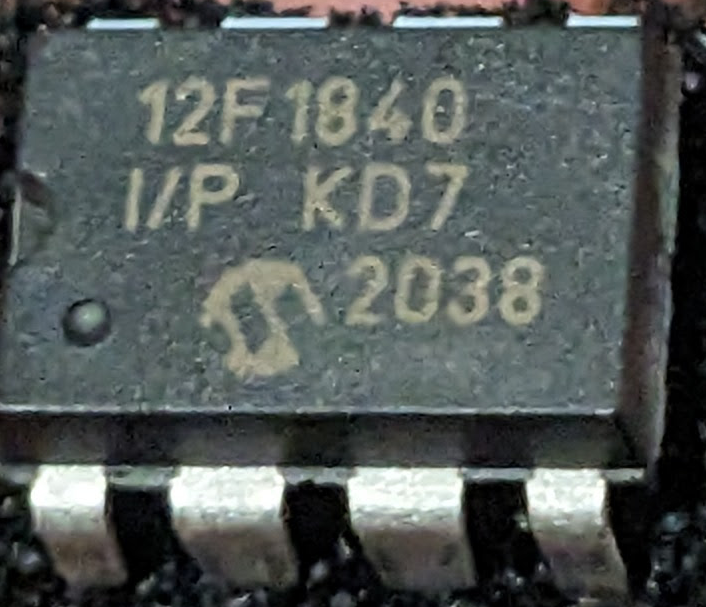
The 12 year-old, Daize, and I were able to pop the original chip out, and the new one back in in a few minutes, and then, the thing just worked.

And then we went a little quiet on the Reverse Beacon Network. Not gone, just not seen as often. The kid and I had done some antenna connection repairs the same night, so I began to worry a bit, but this morning, I think I figured out the issue. For whatever reason, the RBN likes a keyer weight of 7. This is configurable in the snazzy new keyer. When I changed the setting from the default of 5 to 7, not only did we turn back up on RBN with the frequency of spots of old, we mostly turned up with our full callsign, something that's rarely happened before.

The fix was made about  25 minutes prior to this picture:


Comments

Popular posts from this blog

Cool Math Tricks: Deriving the Divergence, (Del or Nabla) into New (Cylindrical) Coordinate Systems

Now available as a Kindle ebook for 99 cents ! Get a spiffy ebook, and fund more physics The following is a pretty lengthy procedure, but converting the divergence, (nabla, del) operator between coordinate systems comes up pretty often. While there are tables for converting between common coordinate systems , there seem to be fewer explanations of the procedure for deriving the conversion, so here goes! What do we actually want? To convert the Cartesian nabla to the nabla for another coordinate system, say… cylindrical coordinates. What we’ll need: 1. The Cartesian Nabla: 2. A set of equations relating the Cartesian coordinates to cylindrical coordinates: 3. A set of equations relating the Cartesian basis vectors to the basis vectors of the new coordinate system: How to do it: Use the chain rule for differentiation to convert the derivatives with respect to the Cartesian variables to derivatives with respect to the cylindrical variables. The chain ...

The Alcubierre Warp Drive Tophat Function and Open Science with Sage

I transferred yesterday's Mathematica file with the Alcubierre warp drive[2] line element and space curvature calculations to the  +Sage Mathematical Software System  today, (the files been  added to the public repository [3]).  If you haven't used Sage before, it's a Python based software package that's similar in functionality to Mathematica.  Oh, and it' free.  I also worked a little more on understanding the theory, but frankly, I made far more progress with the software than the theory.  What follows will be a little more of the Alcubierre theory, plus, a cool Sage interactive demo of one of the Alcubierre functions[1], as well as a bit about my first experience with using Sage. Theory The theory is fun, but it's moving slowly.  Here's the chalk board from this morning's discussion Alcubierre setup the derivation using something called the 3+1 formalism which means we consider space to be flat, (in this case), slices that are labelled ...

How Many Files Can You Add to a GPT Project? An Interview with GPT-5 on Limits, Context Engineering Tips, and Chats

 Setting the scene: I’m tinkering with Project TouCans, knee-deep in radio logs, SQLite dumps, and Cesium code. Naturally, I’m wondering if shoving all this into one GPT Project is a recipe for brilliance… or for disaster. So I turn to Vril — you know, after Brainy from the Legion of Super-Heroes , because what else do you call your AI sidekick who always has the answers? Time to ask him straight up. [ As an aside, yes, GPT-5 has decided to sometimes call me Vail. I'm not sure why to be honest. Also, I asked Vril, er GPT-5, to write up our interview for me. Apparently, me asking it to 'Bro' up a few stories, just for fun, has convinced Vril that I use 'Like,' more than I actually might. ] Me (Vail): So Vril, how many files can I throw into a GPT Project before it just starts choking? Like, is there some magic number where the context window taps out and everything falls apart? GPT-5 (Vril): Great question. There’s no single hard file limit. What matters is ...